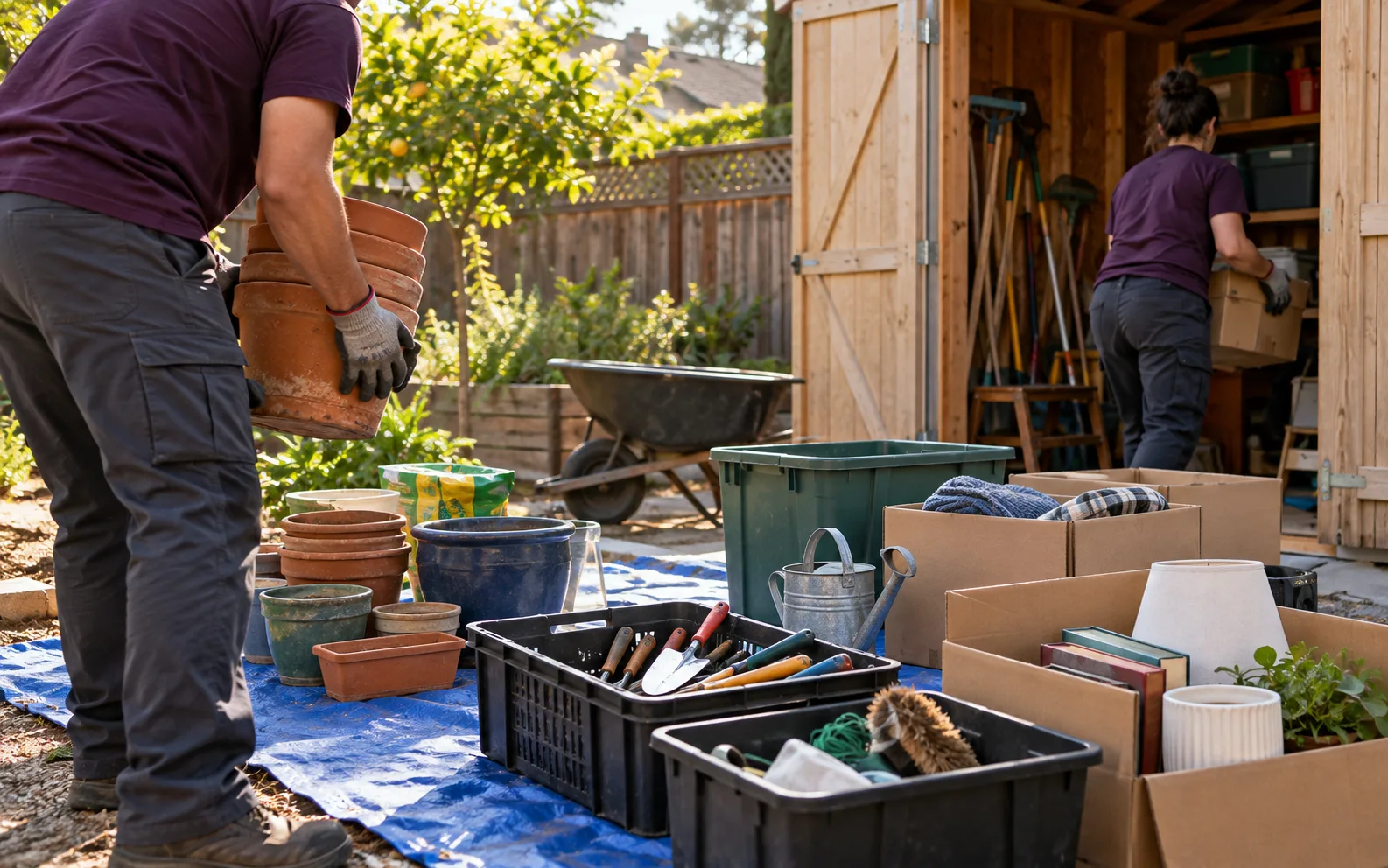
A useful estimate starts with the parts of the job that cannot be guessed from a street address. Work through the steps below before you call or send photos.
Make a protected keep zone
Choose a garage corner, patio, or set of bins outside the loading path. Move keep items there before the crew arrives. A paper note on one shelf is easy to miss once several people are working, so use a separate physical zone.
Pull out documents and personal items
Check toolboxes, coffee cans, tackle boxes, old luggage, and cabinet drawers for keys, photos, receipts, titles, and small valuables. Shed cleanouts move quickly once loading starts. Handle the small personal search before the large items.
Separate chemicals from ordinary junk
Paint, fuel, pesticides, pool chemicals, batteries, propane cylinders, and containers with unknown contents should not be buried in a general junk pile. Set them aside without mixing or pouring anything. Ask the responsible local household hazardous waste program for current instructions.
Label the decisions plainly
Use three groups: keep, remove, and ask. “Ask” is useful for an item whose owner is not present or whose disposal route is uncertain. Avoid a donation pile unless a receiving organization has confirmed that it will accept the item in its current condition.
Final walk-through
- Open every drawer and tote
- Check the wall behind freestanding shelves
- Remove keys and documents
- Identify liquids and batteries
- Photograph the remove pile
- Keep the access path open
When the crew arrives, point out the keep zone first and walk the remove area together.